26/08/26: Know a Brand That Needs Better Fulfillment? Refer a brand & get Rewarded

3PL Fulfillment for Lithium-Battery-Powered Goods

Jay Group is an omnichannel 3PL: we run direct-to-consumer e-commerce, recurring subscriptions, and B2B wholesale from a single controlled pool of inventory, so a brand that ships lithium-battery products can sell everywhere it wants without fragmenting its stock. Most of these brands aren’t on one channel — they’re on Shopify and Amazon and TikTok Shop, running a replenishment program, and landing their first retail accounts, all at once — and the moment each of those pulls from separate inventory in separate places, you get oversells, stockouts, and product sitting in a building that isn’t allowed to ship it. One operation, one accurate inventory position, allocated to wherever the order came from, is what keeps a scaling brand out of that trap.

And here’s the part worth saying first, because with this category it decides everything: we don’t broker your product to warehouses we don’t control. We own and operate our facilities directly. Lithium-ion and lithium-metal batteries are regulated dangerous goods, and who stands on the floor — whether the people packing, labeling, and staging your shipments are trained and certified to touch Class 9 material at all — is not a detail. For this product, it is the whole question.

Advanced Kitting, Bundling & Branded Packaging

Fragrance brands rarely ship a single bottle. You ship discovery sets, layering duos, deluxe gift sets, holiday coffrets, travel-spray trios, sampling decants, and influencer PR kits — each an assembly job, not just a pick. This is a core Jay Group strength.

We run dedicated automation for cartonization alongside a specialty packaging division, so complex multi-SKU builds get assembled accurately and at speed. Kitting, bundling, insert and decant management, branded packaging, and premium custom unboxing all happen under one roof and one team — because in fragrance, presentation is part of the product. Gift sets carry real complexity — mixed flammable and non-flammable components in one carton, each with its own labeling path — and getting that right at holiday volume is what we’re built for.

Scale Your 3PL Fulfillment without Compromise

Meet with Dan Weiss - Vice President of Strategy at Jay Group

3PL for Shopify Fulfillment

Shopify is where most of these brands run their owned store, and it’s where we start. Our integration syncs orders, inventory, and tracking between Shopify and our warehouse in real time, so your storefront always shows accurate available-to-sell and you never oversell a unit you don’t have. The difference with a battery product shows up at the carrier hand-off: lithium shipments have to move on services that accept them, with the right marks applied, and often by ground rather than air. We build that into how the order ships, so a Shopify sale doesn’t quietly turn into a rejected parcel, and the operation scales with you as you grow.

3PL for Amazon Fulfillment

FBA, FBM & SFP

Amazon is unforgiving with battery products. Lithium items go through Amazon’s dangerous-goods review, require a safety data sheet, and carry prep and transport restrictions that have to be exactly right, or shipments get held and your listings go dark right when your ad spend is running. We prep FBA shipments to Amazon’s exact spec — including the dangerous-goods documentation and lithium-battery requirements specific to this category — so inventory checks in clean the first time. For brands that would rather hold stock with us, we run FBM and Seller-Fulfilled Prime, so you keep the Prime badge and its conversion lift while controlling your own inventory and sidestepping long-term storage fees.

3PL for TikTok Shop Fulfillment

TikTok Shop rewards speed and punishes late fulfillment. A single video can 10x your order volume overnight, and the platform’s ship-window SLAs don’t flex because you got lucky — miss them and you get penalized right as you’re going viral. The trap with a battery product is that speed and compliance pull against each other: the fast, cheap service often won’t legally carry the item. We’re built to absorb that spike and still ship inside the window on services that accept lithium goods, with the pick-pack capacity, staffing depth, and pre-built compliant packaging to turn a breakout moment into revenue instead of cancellations and account strikes.

3PL for Walmart & Target Fulfillment

Selling into the big-box marketplaces and enterprise stacks is its own discipline. Walmart, Target, and NetSuite all connect through our integrations over the API, so orders and inventory move in real time and your team keeps living in the system it already uses. Whether it’s marketplace orders or first-party retail, the data stays accurate underneath instead of forcing your operation into someone else’s portal. And because these retailers apply their own dangerous-goods rules on top of the federal ones, that compliance work sits with a team that runs it every day — the wholesale side runs through SPS Commerce, covered next.

Wholesale fulfillment & SPS Commerce integration

When a battery-powered-goods brand wins its first real retail account, fulfillment stops being about parcels and becomes about compliance in two directions at once — the retailer’s routing rules and the dangerous-goods rules — and one missed label, wrong pallet configuration, or blown ship window becomes a chargeback that quietly eats your margin.

This is where SPS Commerce matters, and it’s specifically a wholesale capability. Jay Group is fully integrated with SPS Commerce for EDI, so your wholesale purchase orders flow in electronically, your advance ship notices and invoices flow back automatically, and every order is built to each retailer’s exact specification. Routing-guide compliance, retail and case labeling, pallet and case configuration, ASN and documentation — the unglamorous work that keeps chargebacks off your invoice — is handled by a team that has run wholesale fulfillment for decades and knows how to stage Class 9 freight to a retailer’s dock without tripping either rulebook. Moving from DTC into national retail or the club channel, that discipline separates a profitable wholesale account from one that costs money to keep.

Compliance and a dangerous-goods -certified team

With this category, compliance is not a page of certificates — it’s whether the people and the building are legally allowed to do the work. Jay Group’s team holds dangerous-goods certifications maintained on a bi-annual cycle through the Dangerous Goods Council, covering 49 CFR (the U.S. hazardous materials regulations), IATA for air, and IMDG for ocean, across the hazard classes we handle — including Class 9 and lithium batteries specifically. Recertification twice a year keeps the floor current as the rules change, which for lithium they do.

Behind that team, our established Jay Group facilities are ISO/IEC 27001 certified for information security and FDA- and DEA-registered — which matters for the beauty-device, wellness, and regulated adjacencies many of these brands also carry, without forcing a credential onto a product that doesn’t need it. A warehouse can only handle lithium goods correctly if its people are trained to and its building is set up for it. We are on both counts.

FDA-registered 3PL fulfillment center certification FDA-registered 3PL fulfillment center certification
ISO/IEC 27001 certified 3pl ISO/IEC 27001 certified 3pl
Certifications & Recognition 3pl Certifications & Recognition 3pl
PCI registered 3pl certification PCI registered 3pl certification
cGMP certified 3pl cGMP certified 3pl

Lot, batch & serial tracking

Traceability in this category is not a feature — it’s what a recall or a warranty claim runs on, and battery products have both. Jay Group tracks lot, batch, and serial numbers down to the unit on Manhattan Associates warehouse management technology. Serial capture matters here in particular: devices carry serial numbers that tie a specific unit to a warranty, a firmware revision, or a manufacturing batch, and lithium-cell safety recalls are almost always scoped to a batch or date range rather than an entire product line. If a cell-supplier issue or a safety hold ever surfaces, we can isolate the exact affected inventory in hours and prove which orders it did and didn’t ship in — the difference between a documented response and a company-ending scramble.

Hazmat handling & compliant storage & shipping

This is the section that decides whether a 3PL can actually run your product, so it’s worth being specific. Lithium-ion and lithium-metal cells are DOT and IATA Class 9 dangerous goods, and they ship under four UN identifications depending on chemistry and how the battery travels: UN3480 for lithium-ion batteries shipped on their own, UN3481 for lithium-ion batteries packed with or installed in equipment, UN3090 for lithium-metal batteries shipped alone, and UN3091 for lithium-metal batteries packed with or contained in equipment. Which one applies changes the packaging, the marks, and the paperwork. Get the classification wrong and everything downstream is wrong with it.

From there, the requirements stack up in ways a general-merchandise warehouse isn’t set up for. Batteries have to travel in UN-tested, spec-rated packaging with terminals protected against short circuit. Watt-hour rating and lithium content determine whether a shipment falls under a lighter provision or the fully regulated rules, and whether it can move by ground under 49 CFR or needs the stricter IATA treatment for air — where lithium-ion cells and batteries shipped on their own are generally held to a limited state of charge. The outer package carries the Class 9 lithium battery mark or hazard label as required, and the documentation has to match the goods inside. Most of this category moves by ground for these reasons, and knowing when a shipment must stay on the ground rather than defaulting to the cheapest air service is part of the job.

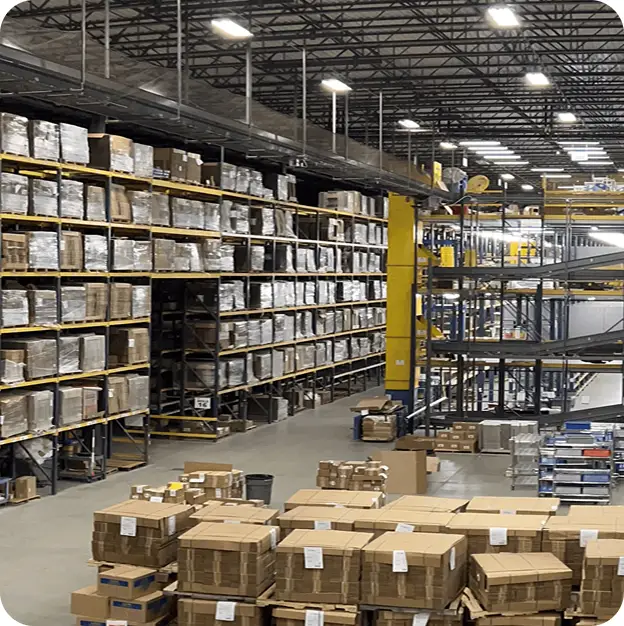
Storage is its own discipline. Our warehouses use advanced flagging to identify and separate hazardous inventory, so lithium stock is staged under the right conditions rather than mixed into general racking, and the people pulling it know exactly what they’re handling. Owning and operating the buildings is what makes that enforceable: we’re not asking a subcontractor to honor a standard we can’t see — we’re running it ourselves, on floors staffed by a certified team. This is the capability most asset-light platforms quietly decline to offer, because brokering Class 9 material to warehouses you don’t control is a risk they won’t take.

Returns management & reverse logistics

Returns are where a lot of margin in this category quietly disappears, and where a battery product needs more care than most. A returned device with a lithium cell inside is still Class 9 material coming back through the door, and it can’t go on a re-stock cart without inspection — a swollen, damaged, or defective battery is a safety issue, not just a write-off. We run reverse logistics as a real operation, built to handle hazmat returns rather than treat them as an exception. Inbound units are inspected and dispositioned by serial and lot; sellable, in-spec units go back to stock; and anything damaged, defective, or unsafe is quarantined and handled under the right procedure. The outcome flows into your systems in real time — protecting your margin while keeping a hazard out of your outbound flow.

The lithium-battery Categories We Handle

Not every 3PL is set up — or certified — for the full range of battery-powered SKUs. Jay Group handles consumer electronics and small appliances, wearables and fitness trackers, wireless earbuds and audio, power banks and chargers, beauty and grooming devices (LED, microcurrent, and heated tools), battery-powered toys, and personal-care and lifestyle products that ship with a lithium cell installed or packed alongside. Whether the battery is loose, packed with the equipment, or built into the device, it’s handled under the same dangerous-goods certification, separation, and traceability standards — so a growing brand can add product lines, and add batteries to products that didn’t have them, without outgrowing its fulfillment partner.

The people who run your operation

On The Floor & On Your Account

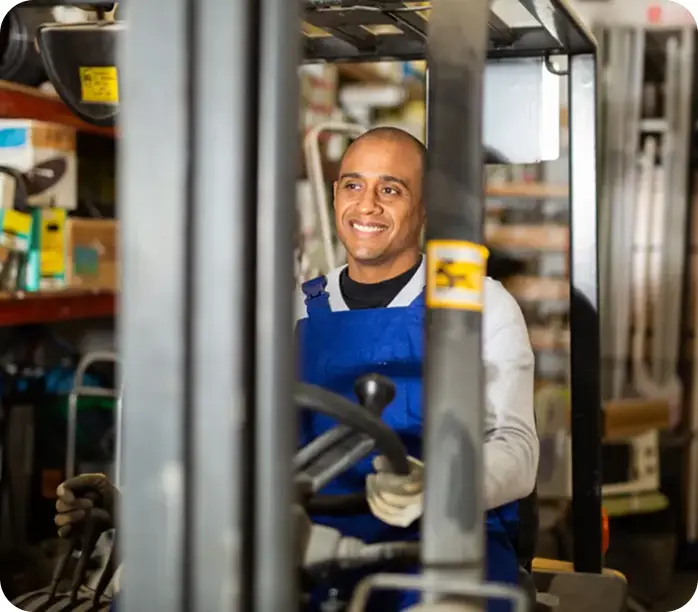
Here’s a number that tells you more about a 3PL than any feature list: how long its people stay. Jay Group’s average employee tenure is more than five years, in an industry where warehouse turnover routinely runs under twelve months — by some measures close to ten times the norm.

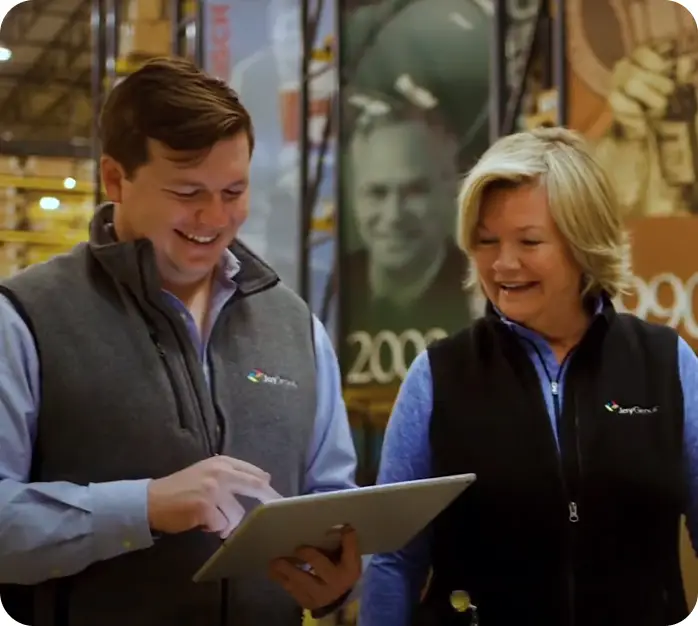
And this isn’t just the account managers. It’s the people on the warehouse floor — the ones packing your Class 9 shipments, applying the right marks, separating your lithium stock, and building your device kits. Dangerous-goods fulfillment depends on trained, current knowledge that only transfers when people stay long enough to earn the certification and teach it to the next person. A warehouse that turns its floor over every year can move boxes; it cannot reliably run lithium-battery compliance, recall traceability, and retail routing guides, because the people who understood how keep walking out the door. Ours stay. Every client also gets dedicated account management located in the warehouse, so the people managing your inventory are the people you actually talk to.

Facilities We Own & Ooperate East, West & Central

We don’t run a network we broker to. We own and operate our facilities directly, and that distinction shows up exactly when it matters most.

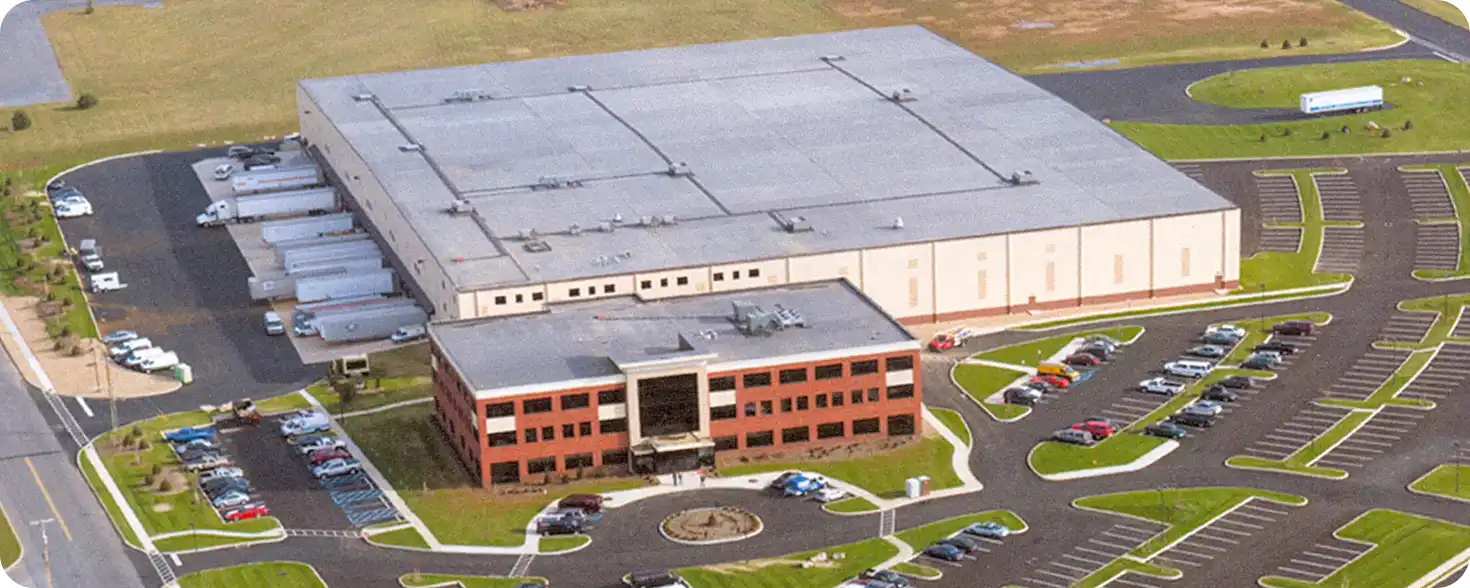
An asset-light platform stitches together warehouses it doesn’t control. In a demo that looks identical to what we do. It stops looking identical the moment your product is Class 9 dangerous goods — that’s when you learn whether the building your inventory landed in is staffed to handle it, whether the standard is followed, and whether the dashboard is telling you the truth about where your batteries sit. When you own and run the buildings, that compliance is something you control rather than something you hope a subcontractor maintains — with no sublease risk and no finger-pointing when a shipment gets rejected. Our facilities span more than 750,000 square feet across four buildings — Lancaster, PA and Mountville, PA in the East, Reno, NV on the West Coast, and a new site in Houston, TX on the Gulf Coast — positioned East, West, and Central so a surge in one region never lands on a single floor.

Last-mile optimization few can match

Owning strategically placed facilities pays off in a way brands feel directly, and it pays off double for a product that mostly ships by ground. With operations in the East, the West, and the central U.S., we position your inventory close to your customers and optimize the last mile in ways an asset-light broker structurally can’t coordinate — because doing it well requires control of the actual floors.

That means reaching more than 90% of the U.S. population within two days without paying for air the category often can’t use anyway, and applying techniques like zone-skipping and regional injection to shorten shipping zones and cut cost on every order. Where air is restricted and expensive, distance from the customer is a cost on every shipment, and placing inventory right is how you stop paying it.

1 Day 2 Days 3 Days 4 Days 5+ Days No Service

Disclaimer: Transit times shown are estimates based on Jay Group’s historical shipping data and are provided for informational purposes only. Actual delivery times vary by carrier, service level, weather, and operational conditions. For accurate transit times specific to your business, request a transportation analysis.

Jay Group's 250,000 sq ft fulfillment warehouse in Lancaster, PA

Family-owned

The Right Decisions, Not The Short-Term Financial Gains

Jay Group is third-generation, family-owned and woman-led, founded in 1965 and led today by CEO Dana Chryst. That ownership structure isn’t a heritage line on an About page — it changes the decisions that get made about your account.

A family that owns the company and reports to clients, not outside investors, can make the right call even when it costs something in the short term: keeping the dangerous-goods certifications current, holding the standard through a brutal peak, keeping the experienced team on the floor, choosing the compliant answer over the cheaper one. Handling Class 9 material correctly costs more than pretending it’s ordinary freight, and a provider optimizing an investor’s return has a reason to cut that corner. Here there’s no such conflict, because there’s no outside return to protect. Six decades in business, 99.9% order accuracy, and a repeat spot on the Inc. 5000 list of fastest-growing private companies is what that looks like over time. Sustainability is part of that long-term view, too — we invest in renewable energy and greener operations across our facilities, with the specific programs varying by site.

A Tech-Driven 3PLWith a Proprietary Platform

Jay Group is genuinely tech-driven, and that starts with two things working together. We built our own proprietary order management system — real-time inventory and order visibility, AI-powered demand forecasting, and reporting far beyond the monthly PDF a lesser 3PL sends, all through a client access portal you actually log into. And we run it on Manhattan Associates WMS, one of the most capable warehouse management systems in the world — named a Leader in the Gartner Magic Quadrant for Warehouse Management Systems for more than fifteen consecutive years. That combination is rare at our scale, and it’s what carries the serial tracking, hazmat flagging, and lot control this category depends on.

One honest note on integrations, because it’s oversold across the industry: the “native connector” many tech-forward platforms market is, underneath, almost always the same Celigo or Boomi middleware any capable 3PL uses — often with the cost buried in renewal fees. We build on that same proven middleware, move your data in real time over the API, and keep the cost transparent instead of hidden. Strong technology, honestly explained, sitting on top of an operation that can actually deliver what the dashboard promises.

The Partner You Scale With

A brand’s first move off self-fulfillment — or its first move from a platform it’s outgrowing — is the highest-stakes logistics decision it makes, and for a battery product it’s higher still, because the wrong partner can’t legally ship half of what you sell. A nice interface and a thousand-account book doesn’t carry you through Class 9 compliance and growth. A true operator with a proprietary platform, a dangerous-goods-certified team that stays, warehouses it owns and runs, and direct access to the family that owns the business does. Jay Group is built for brands shipping lithium-battery-powered goods that want to scale — enterprise capability and boutique-level care under the same roof.

Frequently Asked Questions

Is Jay Group certified to ship lithium batteries and hazmat?

Yes. Our team holds dangerous-goods certifications maintained on a bi-annual cycle through the Dangerous Goods Council — covering 49 CFR, IATA, and IMDG across the hazard classes we handle, including Class 9 and lithium batteries. Our established Jay Group facilities are also FDA-registered and ISO/IEC 27001 certified, so both your product handling and your data meet recognized standards.

Is Jay Group tech-driven?

Yes. We built our own proprietary order management system — real-time visibility, AI-powered forecasting, and deep reporting through a client access portal — and run it on Manhattan Associates WMS, a longtime Leader in the Gartner Magic Quadrant for Warehouse Management Systems. Technology is core to how we operate, not a dashboard bolted on afterward.

How does Jay Group handle Class 9 lithium-battery shipments?

We classify each product to the right UN number — UN3480, UN3481, UN3090, or UN3091 — and pack it in UN-spec packaging with the required Class 9 marks and labels. Watt-hour rating, lithium content, and ground-versus-air rules determine how each shipment moves, and a certified team applies them. Lithium stock is flagged and separated in storage rather than mixed into general racking.

Does Jay Group handle lithium-battery returns?

Yes — reverse logistics is a strength, and we treat battery returns as the hazmat they are. Inbound units are inspected and dispositioned by serial and lot; in-spec units go back to stock; and damaged or defective batteries are quarantined and handled under the right procedure. Results sync to your systems in real time, so returns don’t quietly drain your margin.

Can Jay Group support e-commerce, subscription, and wholesale at once?

Yes — that’s what omnichannel means here. DTC e-commerce across Shopify, Amazon, and TikTok Shop, replenishment and subscription programs, and B2B wholesale with full SPS Commerce EDI integration, all from one inventory pool.

What makes Jay Group different from tech-forward 3PLs?

Most brands are told to choose between a tech-forward platform and a hands-on operator. Jay Group is both: a proprietary, AI-powered platform on an enterprise WMS, running in warehouses we own and operate ourselves, with a dangerous-goods-certified team that stays for years. For a Class 9 product that most asset-light platforms won’t touch, owning the building and staffing it with certified people is the whole difference — and because we’re family-owned, you’re a client, not a line in an investor’s return.


Contact Us

If you sell electronics, wearables, beauty devices, small appliances, toys, or anything that ships with a lithium battery, and you need omnichannel, Class 9-compliant fulfillment from a partner who actually owns and runs the building your product sits in — and staffs it with a certified team — let’s talk. Contact Jay Group to tour a facility or start onboarding.